August 2026
EV Charger Installation Guide: What You Need to Know
Thinking about installing an EV charger at home? Find out what it costs, the rules you need to follow, and how the installation works, step by step.
Written by:


Considering installing an EV charger at home? Read about the benefits, costs, installation steps and how we can help.
Whether you're thinking about buying an electric vehicle (EV) or you've already taken the leap, you'll be thinking about where to charge. There are more public charging stations popping up across the UK, and on-street charging ports are making driving an EV more tempting. But the most convenient solution to charging is a home EV charger, and it can save you money too.
Here, we share everything you need to know about installing one at home, from cost and regulations to the step-by-step installation process.
Why Install an EV Charger at Home?
We already build charging into our daily routines, whether it’s topping up a phone, tablet or laptop. It's the same with an EV. Plugging your car in overnight means it'll be fully charged and ready to go in the morning, no fuss.
Convenience isn't the only benefit of home EV charging. Using your charger's app also lets you schedule charging to make the most of off-peak rates. Combining your charger with our So EV tariff means you'll pay 7.5p per kWh between midnight and 5am. That could mean driving up to 600 miles for under £10, and a saving of up to 91% compared with public charging.¹ You can use the lower overnight rate for the rest of your home too, so shifting high-energy tasks like laundry or dishwashing into these hours could save you even more.
Maximise your EV battery's lifespan by keeping it charged between 20% and 80%. Read more about how long electric car batteries last.
Before booking your installation, there are a few things to consider, like where you need the charger positioned, how close the electric meter is to your charging point, and if you need any additional work done. Our expert team can talk you through suitable charging point locations, and how this might affect the cost of installation.
Speak with our expert team by emailing ev@so.energy or calling 020 4625 1900.
Types of Home EV Charger
Before you compare prices, it helps to know what you're choosing between. Home chargers differ in three main ways: the cable, the speed, and how smart the unit is.
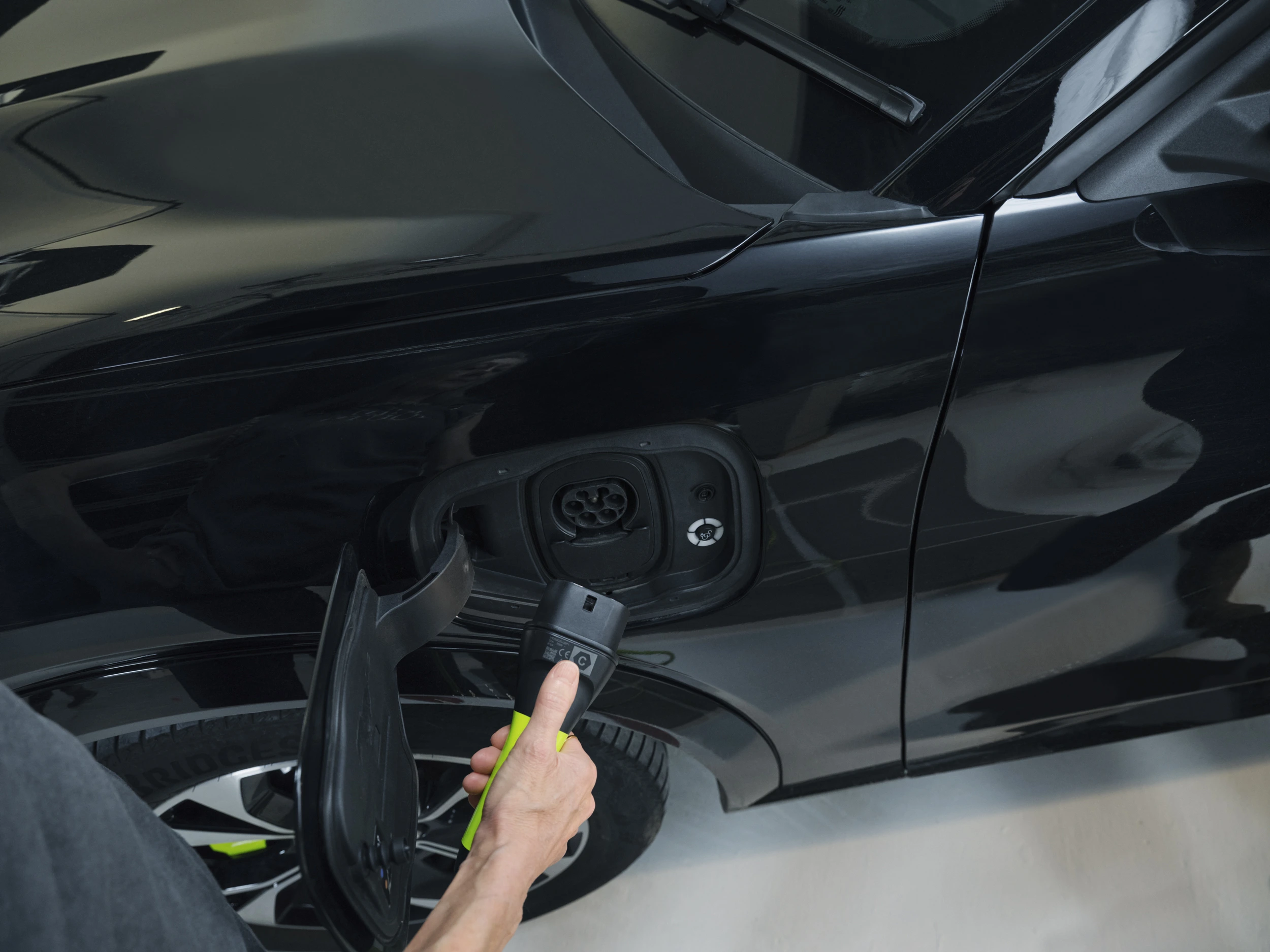
Tethered or untethered. A tethered charger has a cable permanently attached, so you can plug your EV in straight from the charger. An untethered charger only has a socket, into which you connect your own cable (usually kept in the boot of your car). Both charge at exactly the same speed. It comes down to your preference of convenience, or a neater look on the wall.
Charging speed. Most UK homes have a single-phase electricity supply, and 7kW is the natural fit. It's fast enough to fully charge a typical EV battery overnight, and it's the speed most home chargers are built for.
Smart or basic. A smart charger connects to an app, so you can schedule charging, monitor your energy use, and lock the unit remotely. Since June 2022, new home chargers sold in the UK must meet smart functionality requirements, so nearly every charger you'll see today is smart. Pairing a smart charger with an off-peak tariff, like So EV, is where the biggest saving on running costs comes from.
How Much Does It Cost to Install an EV Charger?
Our chargers start from £899, including standard installation. The final price depends on the unit you choose and the work your home needs:
- Charger unit: our range starts at £899 for the VCHRGD Seven Pro and £999 for the solar-optimised Myenergi zappi GLO.
- Standard installation: covered in the price above for most homes, including up to 15 metres of cabling between your electric meter and charger.
- Additional electrical work: if your home needs a longer cable run, or your consumer unit needs upgrading, this counts as a non-standard installation. We'll always talk through any extra cost with you before booking.
You can get your charger installed for just £99 upfront, and pay the remaining balance after installation. It's also worth thinking about the distance between your charger and your electricity meter, since installing further away can push the cost up.
Installation of a home EV charger should always be done by a qualified electrician. This makes sure the installation meets safety standards, and it's backed by our 2-year workmanship warranty. We only use fully qualified, quality-checked installers for your peace of mind.
EV Charger Installation Regulations and Requirements
Every home EV charger installation in Great Britain needs to meet a few legal requirements, whichever supplier or installer you choose.
Smart charge point regulations. Since June 2022, new home chargers must be smart, meaning they can send and receive data and shift charging away from peak times. This helps to balance demand on the wider energy grid.
Wiring standards. Installations must follow UK wiring regulations, covering things like proper earthing, isolation switches and circuit protection. This is what keeps your home's electrics safe once the charger's connected.
Building regulations. EV charger installation needs to be signed off by a registered, competent installer or reported to your local building control body. This is why we only work with vetted, fully qualified electricians.
Grid notification. Your installer will notify your local Distribution Network Operator (DNO) about the new charger, so the local grid can handle the extra load.
None of this needs to be something you manage yourself. A qualified installer, like the ones we work with, handles the technical compliance as part of your installation.
Do I Need Planning Permission for a Home EV Charger?
For most homes, no. If you've got off-street parking, like a driveway or garage, installing an EV charger usually falls under permitted development rights. That means you can go ahead without applying to your local council, as long as the charger is wall-mounted and within standard size limits.
There are a few exceptions where you'll need to check first:
- You live in a listed building or a conservation area.
- Your installation would need cabling to cross public land, such as a pavement, to reach on-street parking.
- You live in a flat, where shared electrical supplies and communal parking can make things more complex.
If any of these apply to you, it's worth contacting your local planning authority before booking your installation. For most homeowners with a driveway, though, it's a straightforward, permission-free process.
What's Involved in the Installation Process?
Here's what to expect when you choose to install an EV charger with So Energy:
- Complete a quick eligibility survey to find out whether we can install your charger.
- We need details of your property, so we can offer an accurate quote. For example, we'll ask for the distance between your fuse board and your proposed charger location, and where you'd like the cables to run.
- Receive a personalised quote, based on the information you've provided.
- Make a £99 deposit payment for your new charger.
- Get your installation booked in. We'll contact you to arrange a date, based on the availability you gave us in your survey.
- Pay the remaining balance after your charger's installed.
Here's what happens on installation day:
- Your installation will be completed by our reliable installation partner, who'll arrive and introduce themselves, with ID.
- Before starting, your installer will confirm the charger location you gave us in your survey.
- Your installer will complete the installation, which usually takes two to three hours, and set you up on your charger's app.
- A few days after your installation, you'll receive a handover pack with all the relevant documentation.
- You'll also get ongoing support to help you get the most from your new home EV charger.
Do I Need a Qualified Installer?
Yes. Using a qualified installer makes sure your home EV charger is installed safely and complies with the latest regulations. Our installers are registered with NICEIC or NAPIT, the two main accreditation bodies for electrical work in the UK, so you can be confident your installation meets the required standard.
Choosing the Right EV Charger for Your Home and Car
We offer two of the best EV chargers on the market, chosen through a strict vetting process from hardware manufacturers that produce best-in-class chargers.
VCHRGD Seven Pro, from £899. A smart, affordable home charger with all the essential features and no premium price tag. Best for drivers who want reliable, straightforward charging.
- Choice of a 7.5m cable, or no cable
- Wi-Fi and Bluetooth connectivity for remote control, scheduling and tracking
- Two solar modes, so you can charge only from solar, or only from surplus solar
Myenergi zappi GLO, from £999. The UK's most popular solar EV charger. Best for homes with, or planning to get, solar panels.
- Choice of 6.5m charger cable, or no cable
- Automatically charges from your surplus solar power for maximum efficiency
- 3-year warranty, with an extension up to 5 years available through Myenergi
Both chargers can add up to 35 miles of range an hour, come with a 3 or 5-year product warranty, and work with our So EV tariff.
Can I Use Solar Panels With My EV Charger?
Yes, our chargers are compatible with solar, so you can charge your electric vehicle using clean energy.
With multiple payment options available, So Solar has never been more accessible. Reduce your reliance on the grid and start saving on your bills. Get a quote for solar installation.
Why Choose So Energy for Your EV Charger?
With a So Energy EV charger installation, you'll get:
- Expert advice on compatibility
- Expert installation
- Great value for money
- A 3 or 5-year product warranty and a 2-year workmanship warranty
- Ongoing customer support, and we're rated Excellent on Trustpilot
- The chance to pair your charger with So EV, our EV tariff, for an enhanced charging experience
Ready to get charging?
Do I Need a Smart Meter for My EV Charger?
If you want to make the most of our So EV tariff's overnight rate, you'll need a smart meter set to half-hourly readings. This is how we can bill you accurately for the electricity you use between midnight and 5am.
Getting a smart meter installed is free, and it also gives you real-time information about your energy use, so you can make smarter choices and potentially save on your bills. If you don't already have one, you can book your smart meter installation at the same time as your charger.
Frequently Asked Questions
Do I Need Planning Permission to Install an EV Charger at Home?
Usually not. Most homes with off-street parking fall under permitted development rights, so you can install a charger without applying to your council. Listed buildings, conservation areas, flats and on-street parking are the main exceptions, so it's worth checking with your local planning authority if any of these apply to you.
What Are the Electrical Requirements for a Home EV Charger?
Your charger needs to be smart, meaning it can be scheduled and can respond to signals that manage demand on the energy grid. The installation also needs to meet UK wiring standards and building regulations, and your installer will notify the local Distribution Network Operator. A qualified, accredited installer handles all of this as part of your booking.
How Much Does It Cost to Install an EV Charger at Home?
Our chargers start from £899, including standard installation, with a £99 upfront deposit and the rest paid after your charger's fitted. Costs can rise if your home needs extra electrical work, such as a longer cable run or a consumer unit upgrade, but we'll always confirm any additional cost with you first.
Can I Install an EV Charger Myself?
No. EV charger installation should always be carried out by a qualified electrician. This keeps your installation safe, compliant with UK regulations, and covered by a workmanship warranty, which a DIY installation wouldn't be.
How Do I Find an Approved EV Charger Installer?
Look for an installer registered with NICEIC or NAPIT, the UK's main accreditation bodies for electrical work. All our installations are carried out by vetted, fully qualified electricians, so this is already built in when you book with So Energy.
Footnotes:
- The 91% saving is based on a public rapid charger costing EV drivers, on average, 17.6p per mile, compared with 1.7p per mile on our So EV off-peak rate. The 1.7p per mile figure is based on a Tesla Model Y, which has an efficiency of 4.5 miles per kWh, using the So EV off-peak rate of 7.5p per kWh between midnight and 5am. The 600 miles for under £10 figure uses the same efficiency and rate. We use the Tesla Model Y because it was the UK's best-selling car in 2025. Actual savings depend on your car's efficiency, driving style and charging pattern.
Charge Your EV at Home
Should I Get a Smart Meter Installed In My Home?
Getting a smart installed in your home is both a free and smart move to make.
With a smart meter, you get real-time information about your energy usage, allowing you to make smarter choices and potentially save on your bills. Plus, it can help reduce the nation's carbon footprint and bring us closer to a greener future.
Stay Plugged Into Our Latest News & Views
We publish news regularly, keeping you informed on new products, industry changes and more.
EV Charger Installation Guide: What You Need to Know
Thinking about installing an EV charger at home? Find out what it costs, the rules you need to follow, and how the installation works, step by step.
Home EV charger: buying guide
Compare home EV chargers by speed, tethered or untethered, smart features and cost, and learn how to choose the right electric car charger for your home.

How do solar batteries work and store energy?
Find out how solar batteries store energy, the different battery types available, and how they help lower your energy bills.
.png)
So Energy earns the 2026 Uswitch Flex Accreditation
So Energy's So EV and So Unique tariffs have been awarded the 2026 Uswitch Flex Accreditation. See what the award means and how flexible tariffs cut bills.
How much does it cost to charge an electric car at home?
Understand how using a smart charger combined with an EV tariff could save you hundreds on EV charging at home.

What Does Net Zero Actually Mean for You and the UK?
Discover how the 2050 Net Zero goal affects your energy bills, the planet, and how So Energy’s solar and EV solutions help you lead the charge.

Which Energy Tariff is Right For Me?
Learn how to choose the best So Energy tariff for your needs with our guide to tariff types and pricing, plus tools to help you save on energy bills.